Facebook
 X
 Pinterest
 Copy Link
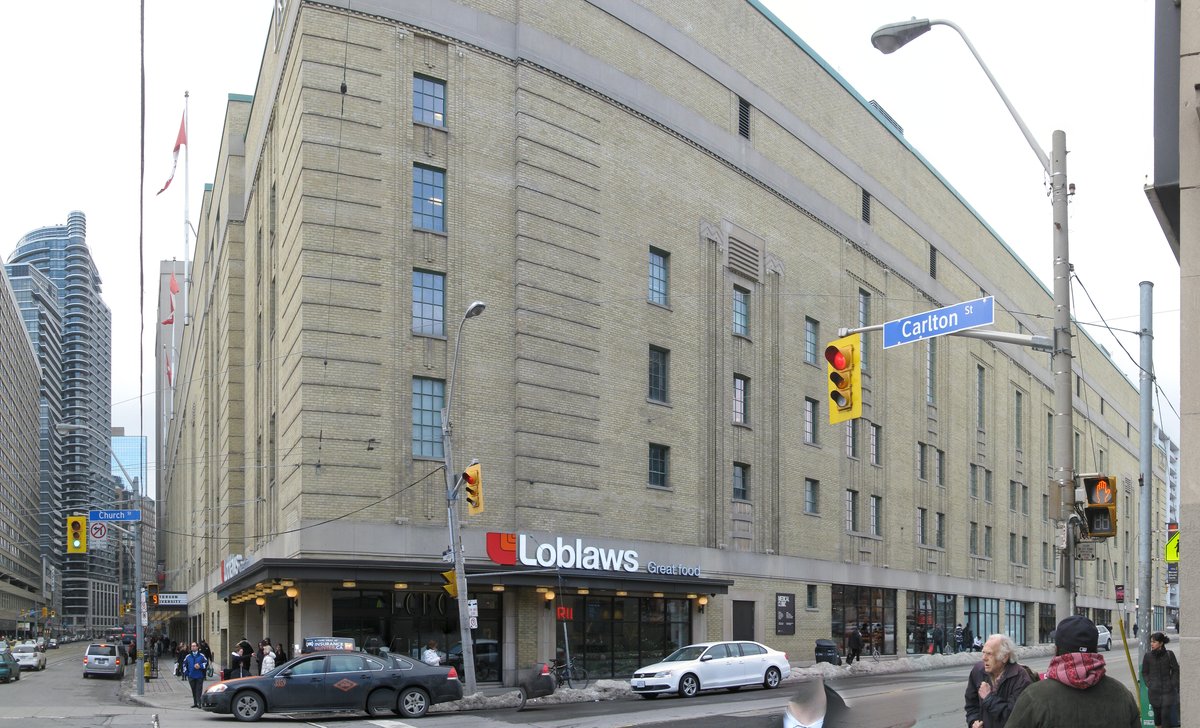
Only in Toronto could a hockey cathedral become a grocery store — and somehow keep its soul.
Stand at Carlton and Church streets and look up at the yellow brick and that famous domed roof. This is Maple Leaf Gardens, at 60 Carlton Street. In the depths of the Great Depression, Leafs managing director Conn Smythe decided Toronto deserved an arena to rival any in the world — and built it in five months and two weeks. It opened on November 12, 1931 — just last week, 95 years ago — with the Leafs losing 2–1 to the Chicago Black Hawks.
It was Canada’s largest arena when built, and for 68 years it was the country’s living room. Foster Hewitt called the games from high above the ice — “He shoots! He scores!” — the Leafs won 11 Stanley Cups here between 1932 and 1967, and sold out every game from 1946 until 1999. But it was never only hockey: Churchill spoke here in 1932, Elvis played his first concerts outside the United States here in 1957, the Beatles stopped here on all three of their North American tours — the only venue to host them on each one — Ali went 15 hard rounds with Canadian George Chuvalo in 1966, and Team Canada beat the Soviets here in the 1972 Summit Series.
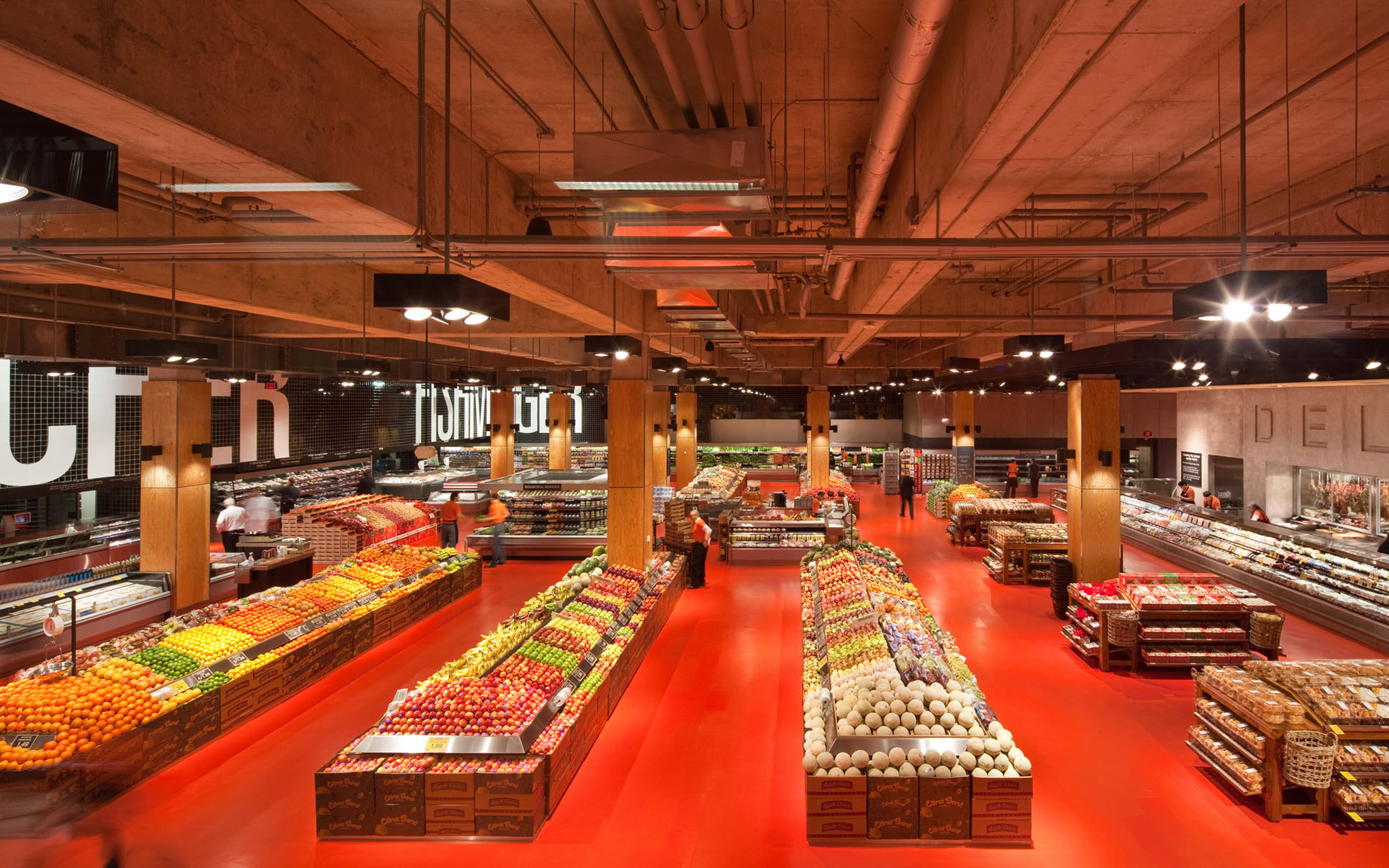
The last Leafs game, on February 13, 1999, was against Chicago — the same opponent as the first, 67 years earlier. Toronto could have demolished what came next. Instead it kept it: designated a National Historic Site in 2007, the Gardens was reborn with a flagship Loblaws on its lower floors in 2011 and TMU’s Mattamy Athletic Centre above it in 2012, a new rink under the original dome. On January 1, 2024, it hosted the first game in Professional Women’s Hockey League history. Students now skate where legends did, and neighbours shop beneath the rafters.
That is Yonge and College in one building: history that refuses to be a museum.
My own Gardens memory isn’t a game — it’s a slice. Back in the day I’d head down there and get a big slice of pizza for $1.50, loaded with green peppers and pepperoni. I can still smell it today.
I rent and sell condominiums around this area all the time, including the towers around College Park, just west of the Gardens — and I still have listings I manage here today. The newest is a lease I have coming up on Yonge Street, just steps from the Gardens. After some 35 years in Toronto real estate and 22 years as a licensed broker, I know how much a building’s story matters to the people who call it home. Thinking of buying, selling or leasing downtown? Call me at 416-543-4947, or book a time at ashchopra.net.
Get Your Free Current Market Value ReviewBook a 10-Minute Strategy Call
Ash Chopra
Real Estate Broker, Century 21 Leading Edge Realty Inc., Brokerage
1825 Markham Road, Suite 301, Toronto, Ontario M1B 4Z9
Direct: 416-543-4947 | Office: 416-298-6000
ashchopra.net
Living Here — Yonge/College, the Garden District and the Church–Yonge Corridor
Schools. Learning here spans almost every age, within a few blocks. Church Street Junior Public School, at 83 Alexander Street, has been part of this community for almost 150 years — it opened in 1872, and its current building is the third on the site; it also shares its home with the Native Learning Centre. Jarvis Collegiate Institute, at 495 Jarvis Street, was founded in 1807 and is Toronto’s first public high school. And Toronto Metropolitan University spreads its downtown campus through the area — including, fittingly, its athletic home inside Maple Leaf Gardens itself.
Culinary experiences and the food scene. Fran’s Restaurant, at 20 College Street, is the neighbourhood’s diner institution: the Fran’s chain was founded in 1940, its College Street location has served since 1950, and generations of Leafs fans made it their stop before and after games at the Gardens — famous for its Banquet Burger, chili and rice pudding. Around it, the Church Street village patios, Yonge Street’s late-night tables, and the flagship Loblaws inside the Gardens itself — groceries under a hockey dome — give this dense corner a food life at every hour.
Paths and trails. Allan Gardens, a short walk east between Carlton, Gerrard, Jarvis and Sherbourne streets, is one of Toronto’s oldest parks: George William Allan donated the land to the Toronto Horticultural Society in 1858, the gardens opened on September 11, 1860, and its conservatory — six greenhouses, some 16,000 square feet, centred on the domed Palm House built in 1909 — is open year-round and free. In November, when the light goes early, there is no warmer walk downtown.
Places of worship. Two landmark churches anchor the Garden District. St. Michael’s Cathedral Basilica, at 65 Bond Street, had its cornerstone laid on May 8, 1845 and was consecrated on September 29, 1848 — designed by William Thomas, financed in large part by Irish immigrants, and the oldest surviving Roman Catholic church in Toronto. A few streets south, Metropolitan United Church, at 56 Queen Street East, was completed in 1872, known as the “Cathedral of Methodism,” and was rebuilt after a 1928 fire, reopening in 1929.
Ethnic diversity and community life. The Church–Wellesley Village, along Church Street around Wellesley, is the heart of Toronto’s 2SLGBTQ+ community, with The 519 community centre at its core. Jarvis Collegiate describes its own student body as a rich mix from over 100 countries of origin, and TMU’s students arrive from everywhere. Add hospital row just west on University Avenue and the audiences still filling the Mattamy Athletic Centre, and this is a neighbourhood built — repeatedly, over two centuries — by newcomers making a home in the middle of the city.